

Somewhere out there is a business owner who just spent real money on Facebook ads for a company whose logo is still the free font that came with the template. [Reader, if that's you: no judgment. We've all been the free font at some point.] The ads probably worked, technically. People clicked, because that's what a well-targeted ad does for a living. What they clicked into, though, was a website that didn't sound like the ad standing next to a logo that had never met either of them. That's not a marketing problem. Marketing did its job fine. That's a “nobody ever decided who this business is” problem wearing a marketing costume, and it's the most common mix-up we see.
So let's fix the mix-up. Two terms, one very expensive habit of treating them as interchangeable, and a Georgia-based marketing studio [hi] that would like to save you the money.
What Brand Strategy Actually Covers
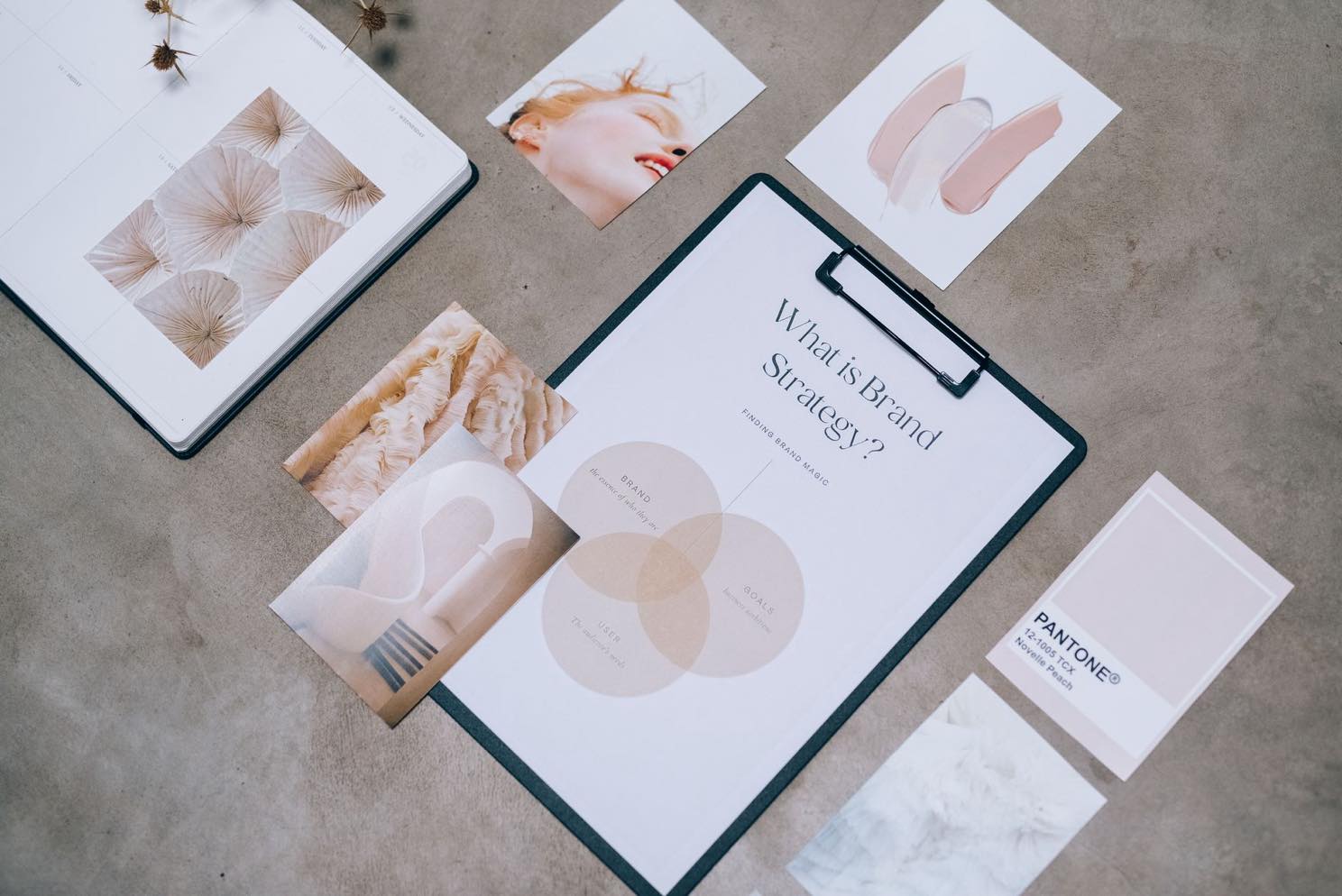
Brand strategy is the decision layer sitting underneath everything a customer ever sees. It answers four unglamorous questions: who are we, who is this for, what do we sound like, and what do we look like while we're doing it. Nobody gets excited reading that sentence, which is exactly the problem: brand strategy is the part everyone wants to skip to get to the fun stuff.
Here's the part that trips people up: the output of brand strategy is not a logo. A logo is what happens after the decisions get made, not instead of making them. The actual output is a set of standing answers (positioning, voice, values, visual system) that every future logo, ad, caption, and out-of-office email gets checked against. Skip that step and you don't get a business with no brand. You get a business that reinvents its brand by accident, one Canva template at a time, and never quite notices it's doing it.

What Marketing Strategy Actually Covers
Marketing strategy is the distribution layer, and it has exactly one job: given who we already are, how do we get in front of the people who'd want us? That's channel selection, campaign planning, a content calendar somebody actually keeps updated, ad spend, and this quarter's specific message. Good marketing strategy is supposed to change constantly. A plan from January that's still untouched in June isn't disciplined, it's just stale, and the market noticed before you did.
Marketing strategy is loud, fast, and measurable in a way brand strategy never is, which is exactly why it gets hired first. You can point at a marketing campaign and say exactly what it earned, down to the dollar. Nobody's ever pointed at a brand strategy deck with that same confidence, even though the brand strategy is usually the reason the campaign worked at all.
The Real Difference: A Compass vs a Route
Brand strategy is the compass. Marketing strategy is the route. [Bear with the metaphor for one paragraph, it's earning its keep.] A compass barely moves: its whole job is pointing at north and staying boring about it. A route changes constantly, on purpose, every time a road closes or a competitor cuts you off in traffic. The businesses that struggle are the ones spinning the compass every time they only meant to reroute: a new logo every time last quarter's campaign underperformed, a new tagline every time a competitor says something clever, a brand that resets before it ever gets the chance to become recognizable to anyone, including the people running it.
If you've ever seen a business with four different fonts across four different platforms, you've seen a compass that got spun one too many times.
Why Businesses Confuse Them (And Why It Costs Them)
The mix-up is honestly forgivable. Both terms get used by people trying to sell you something (ourselves included, we're not pretending otherwise), and both eventually show up in the exact same places: your website, your ad account, your Instagram grid. From the outside, brand and marketing look like one job wearing two name tags.
From the inside, they're two different questions, asked in a specific order, and skipping the first one doesn't make it disappear. It just means you're answering it by accident, one ad at a time, one caption at a time, until the business has quietly developed seven slightly different personalities and nobody agreed to any of them.
What we see in the field
This is the part of the post where we're supposed to cite a big statistic and move on. Instead, here's what we actually watch happen, repeatedly, from our desk in Atlanta: a business owner comes to us wanting marketing: ads, a content calendar, "just get us some traffic", and there's no brand decision underneath any of it yet. No settled voice. No visual system. Just a logo that happened once and was never revisited.
Every deliverable we make for that client ends up looking like it belongs to a slightly different company than the last one, not because we're inconsistent, but because there's nothing consistent to be checked against. The fix is never "try a different ad." The fix is going back and doing the branding work that should have happened first. Every time we do it in that order instead, the marketing gets dramatically easier to write, because it finally has something true to say.
And 88% of people now say trusting a brand is an important or critical factor in whether they buy from it, on par with quality, per Edelman's 2026 Trust Barometer. Trust isn't built by a clever ad. It's built by a business that says the same true thing about itself every single time, long enough for someone to believe it.

Which One Do You Need First?
Answer this honestly, no free font allowed: can you say, in one sentence, what your business stands for and how you want it to sound saying it? If the honest answer is no, you need brand strategy first, before a single ad gets bought. If the honest answer is yes, and the actual problem is that nobody's finding you yet, marketing strategy is genuinely the next move, and you're ahead of most people who ask us this question.
If you're in the first group, that's exactly what a Strategy Session with The Greenhouse Studios is built to sort out: one conversation to figure out which one you actually need, before you spend money finding out the hard way.
Either way, retire the free font. It's done more than its share.